

Amazon Product Image Requirements: Your Complete Guide

Understanding Amazon's Visual Standards (And Why They Matter)
Amazon's image requirements might seem daunting, but they're actually a blueprint for success. These standards aren't random; they're designed to create the same trust and confidence customers feel in physical stores. Imagine a well-lit shop with organized shelves, where products are clearly displayed. That's the experience Amazon aims to recreate online.
These standards directly impact your sales. Compelling visuals enhance the customer experience, leading to higher engagement and increased conversion rates. Conversely, poor images can cause confusion, lower sales, and even suppressed listings. Investing in high-quality photography isn't an expense—it's a vital investment.
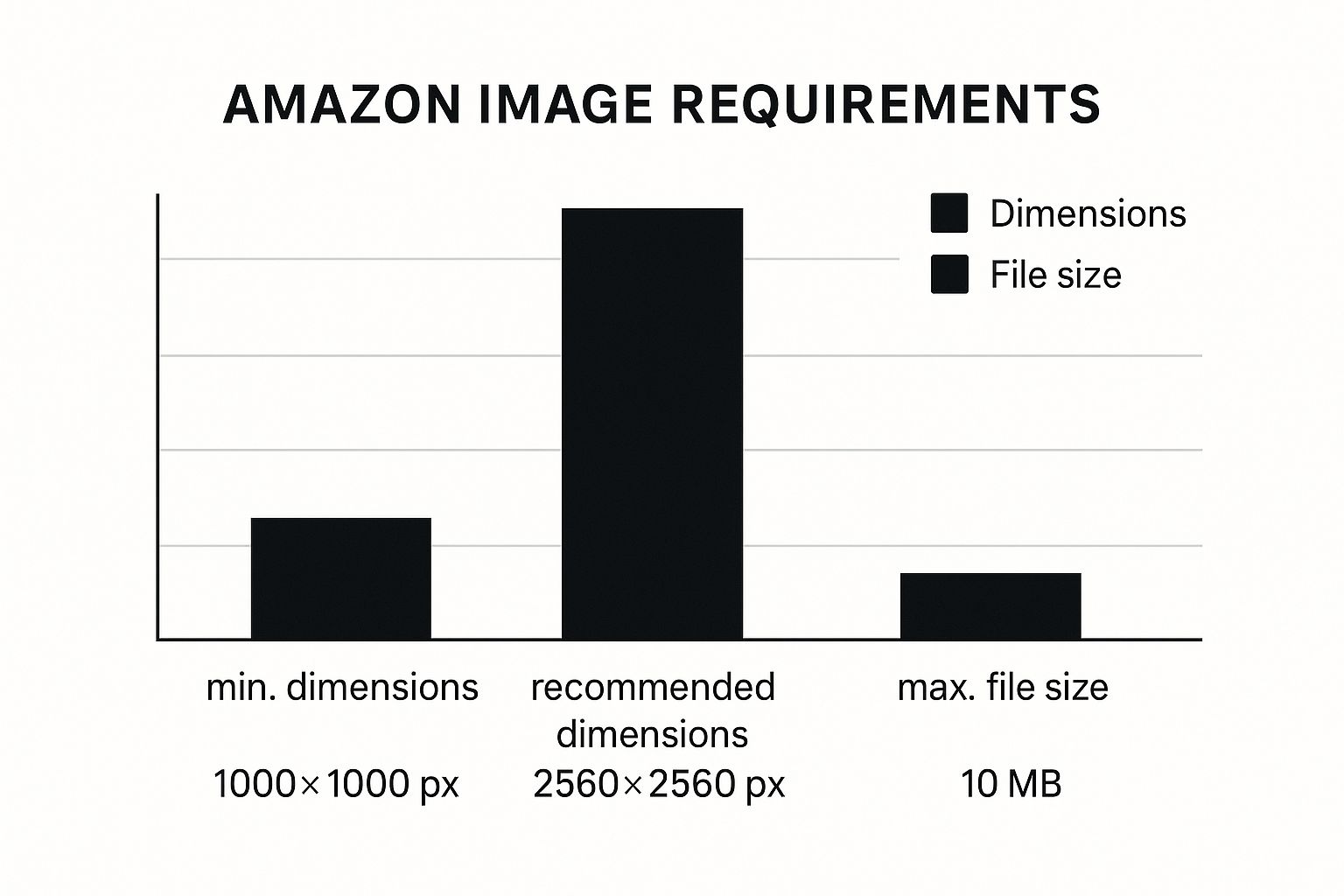
The infographic above compares three Amazon image requirements: the minimum dimensions of 1000x1000 pixels, the recommended dimensions of 2560x2560 pixels, and the maximum file size of 10 MB. Meeting the minimum gets your product listed, but aiming for the recommended dimensions provides a better viewing experience, allowing zoom functionality and showcasing details. Keeping the file size optimized ensures fast loading times, further improving user experience.
The Psychology Behind Amazon's Image Policies
Amazon understands the power of visuals. High-quality images aren't just about aesthetics; they convey information, build trust, and influence buying decisions. Clear images allow customers to "virtually" examine the product. This is especially important online since shoppers can't physically handle the items. For instance, a close-up of a fabric's weave can reassure customers about its quality.
Consistent, professional images create a sense of uniformity and professionalism, boosting customer confidence in the marketplace. Amazon has strict image requirements for high-quality visuals. One key requirement is that images must be at least 1000 pixels on the longest side to enable zoom, with a recommended size of 2000 pixels or more. This allows clear product views. Images must also use formats like JPEG, PNG, GIF, or TIFF, and use sRGB or CMYK color modes. Meeting these standards creates a consistent platform look, building customer trust. Discover more insights about Amazon image requirements.
Why Compliance Is Key to Competitive Advantage
Complying with Amazon's image requirements isn't just about avoiding penalties; it's about maximizing your competitive edge. Compliant images increase your product's visibility in search results, attracting clicks and converting browsers into buyers. Amazon rewards compliant listings with greater visibility, giving you an advantage over competitors. This increased visibility, coupled with strong images, can significantly boost your click-through and conversion rates, driving sales and brand presence. This directly impacts your profitability and long-term success on Amazon.
The following table provides a detailed breakdown of Amazon's image technical requirements:
Amazon Image Technical Requirements Breakdown
Complete technical specifications for Amazon product images including dimensions, formats, and quality standards
| Requirement | Specification | Impact on Listing |
| Minimum Image Dimensions | 1000 x 1000 pixels | Enables zoom functionality; minimum for listing acceptance |
| Recommended Image Dimensions | 2560 x 2560 pixels | Optimal zoom experience; showcases finer product details |
| Maximum File Size | 10 MB | Impacts loading speed; larger files can deter customers |
| Accepted File Formats | JPEG (.jpg), PNG (.png), GIF (.gif), TIFF (.tif) | Compatibility with Amazon's platform |
| Color Mode | sRGB or CMYK | Accurate color representation |
| Background | Pure white (#FFFFFF) | Product isolation; professional look |
| Main Image Content | Only the product being sold | Avoids confusion; accurate representation |
This table summarizes the critical technical aspects of Amazon product images. Meeting these requirements not only ensures listing acceptance but also optimizes product visibility and enhances the customer shopping experience. Non-compliance can lead to suppressed listings, reduced visibility, and ultimately, lost sales.
Technical Specs That Make Or Break Your Listing Success
This is where the nitty-gritty of selling on Amazon really comes into play. Every single detail, from pixel dimensions to file formats, has a significant impact. Understanding Amazon’s technical image requirements is like understanding the rules of a game; you need to know them to win. These specs aren't random; they directly influence how well your product performs and, ultimately, your profits.
The Power of Zoom: More Than Just a Closer Look
A crucial requirement is the 1000-pixel minimum image dimension on the longest side. This activates the zoom function, a key feature that boosts conversion rates. Imagine a customer in a brick-and-mortar store. They naturally want to examine a product closely. The zoom feature allows online shoppers to do just that, inspect details, and feel confident about their purchase. While 1000 pixels is the minimum, Amazon recommends 2000 pixels or larger for the best display. This provides a sharper, more detailed zoom, enhancing the customer experience even further.
File Formats and Color Profiles: The Unsung Heroes of Visual Appeal
Amazon also specifies acceptable file formats: JPEG, PNG, GIF, or TIFF. Using the correct format ensures compatibility and a smooth experience. It's like speaking the same language as Amazon’s platform; clear communication ensures clear display. Similarly, using sRGB or CMYK color modes guarantees accurate color representation. This prevents disappointing differences between the online image and the physical product, which builds trust and minimizes returns. Imagine a vibrant red dress appearing dull online; this could easily lead to unhappy customers.

Common Technical Mistakes: Avoid Costly Pitfalls
Many sellers stumble over common technical errors, missing out on potential sales. Uploading images with incorrect dimensions, file formats, or color profiles can lead to suppressed listings, impacting visibility and ultimately, sales. Careful attention to detail and a thorough understanding of the requirements can prevent these issues. Learn more in our article about how to master Amazon product photography. This resource offers additional guidance on optimizing your product images for success.
Optimizing File Size for Speed and Conversions
Another important factor is file size. The maximum permitted is 10 MB, but smaller, optimized files improve page loading speed. This is vital, as slow loading times frustrate customers and lead to higher bounce rates, meaning fewer sales and a negative impact on your listing's performance. Think of it like a physical store; a cluttered, slow experience discourages shoppers, while a clean, fast one encourages browsing and buying. You might be interested in: How to master product image editing.
Mastering Your Main Image For Maximum Impact
Your main image is the first impression you make on potential customers. It can determine whether a shopper clicks for a closer look or scrolls past your product in a split second. This makes your main image a powerful tool for attracting attention and boosting sales. Understanding and optimizing for Amazon’s image requirements is crucial for success.
The White Background Rule: Why It Matters
One of Amazon’s best-known image requirements is the pure white background. While it might seem limiting, this standard serves a vital purpose. The white background removes distractions, putting your product front and center. This mirrors the clean product displays of physical stores, building trust and improving conversion rates.
The 85% Fill Requirement: Maximizing Visual Real Estate
Another key requirement is the 85% fill rule. Your product needs to occupy at least 85% of the image frame. This maximizes its visual impact, ensuring it appears large and clear in search results. A small, cluttered image can get lost in the crowd, but a large, clear image commands attention. Meeting this requirement helps your product stand out in the busy Amazon marketplace.
Composition, Lighting, and Positioning: The Trifecta of Success
Even with a white background and the correct fill, composition, lighting, and product positioning remain essential. Good lighting highlights details and texture, while careful positioning emphasizes key features and benefits. For instance, showing a watch with its face clearly visible allows shoppers to immediately grasp its style and design. For deeper insights, consider resources like this guide on Amazon product photography.

Turning Browsers into Buyers: Real-World Examples
Successful Amazon sellers understand the importance of visual storytelling, even within Amazon’s requirements. They use composition and lighting to highlight their products’ unique selling propositions. Imagine running shoes photographed mid-stride, showcasing their lightweight flexibility. This kind of imagery connects with the target audience and encourages purchases. Resources like this guide on Amazon product photography can help improve your product visuals.
Meeting Amazon's product image requirements is more than just following rules; it's about providing a positive customer experience. Mastering the art of impactful visuals can significantly boost your click-through rates, conversions, and ultimately, your profits.
Additional Images That Tell Your Product's Complete Story
Your main product image is the hook that grabs a potential customer's attention, but your additional images are what truly reel them in. These supplementary visuals provide the perfect opportunity to showcase your product's versatility, address any potential concerns a buyer might have, and ultimately, drive conversions. It's here that you transform a simple product listing into a compelling visual story.
Lifestyle Images: Showing Your Product in Action
Lifestyle images provide context. They show your product in a real-world setting, demonstrating its actual use and benefits. Instead of simply presenting a coffee mug, picture it being enjoyed on a cozy porch, instantly evoking a feeling of warmth and relaxation. This emotional connection resonates powerfully with customers, helping them envision themselves owning and enjoying your product. Imagine selling a yoga mat. A photo of someone using it in a serene outdoor setting is far more effective than a plain studio shot. It allows potential buyers to project themselves into the scene, experiencing the product's benefits firsthand.
Detail Images: Building Trust and Confidence
Close-up, detail images highlight textures, materials, and important features. These shots address any uncertainties a customer might have, mimicking the in-store experience of examining a product up close. Think of a customer scrutinizing the stitching on a garment or the intricate details of a piece of jewelry. This level of visual detail builds trust and reduces hesitation, ultimately making a purchase more likely. By proactively answering questions before they're even asked, you instill confidence in potential buyers.
Infographics: Communicating Value at a Glance
Infographics distill key product information into easily digestible visuals. They can effectively showcase dimensions, materials, or special features in a clear and concise manner. This approach is particularly useful for technical products or those with numerous features. For example, a chart comparing different models or illustrating the product's assembly process can quickly and efficiently convey critical information.
Balancing Amazon's Restrictions with Compelling Marketing
Successfully utilizing additional images on Amazon requires navigating specific requirements. A crucial point to remember is that product images must accurately represent the product without misleading the customer. While lifestyle images can include props and settings, the product itself should remain the central focus. Similarly, infographics must accurately depict the product’s features and functionality.
Mastering Visual Storytelling with High-Quality Images
High-quality product images significantly impact sales. Studies reveal that using multiple images can boost sales by up to 20%. Amazon recommends including at least six images per product listing. Additionally, the product should fill at least 85% of the image frame, and main images should utilize a plain white background. These guidelines underscore the importance of visual content in influencing purchasing decisions. Find more detailed statistics here. Optimizing your images allows sellers to enhance their listings and attract a larger pool of potential buyers. Tools like ProdShot can help elevate simple snapshots into professional, Amazon-ready images, simplifying the process and ensuring compliance with Amazon's image requirements.
Ultimately, your additional images should work together to tell a cohesive and compelling story about your product. They should anticipate and answer questions, highlight key benefits, and forge an emotional connection with potential buyers. By mastering visual storytelling, you can maximize your conversion rates and achieve greater success on Amazon.
Avoiding Common Violations That Kill Your Listings
Even minor oversights in your Amazon product images can lead to suppressed listings, account warnings, and lost sales. Understanding Amazon's enforcement patterns is therefore critical to protecting your revenue. This section reveals the most frequent image violations—those seemingly small mistakes that can trigger Amazon's automated systems. Knowing these pitfalls will save you time, money, and frustration.
Background Issues: More Than Meets the Eye
One of the most common violations involves the background of your main image. Amazon requires a pure white background (RGB 255, 255, 255) for these primary images. Even subtle shadows, off-white hues, or stray pixels can lead to rejection. This is because Amazon's algorithms scan for precise color values.
A slightly gray background that looks fine to us could still trigger a violation. For example, a faint shadow under a product might be nearly invisible to the human eye, but easily detected by Amazon’s systems. Maintaining a perfectly white background is crucial for compliance.
Text and Logo Overlays: When “Harmless” Turns Harmful
Adding text or logos to your main image is another frequent violation of Amazon's image requirements. While it might seem helpful to add branding or promotional messages, Amazon strictly prohibits these additions. This restriction ensures a consistent and clean look across the marketplace. The focus should be solely on the product itself.
Overlays, even seemingly small and unobtrusive ones, can violate policy and put your listing at risk. For example, adding "Limited Time Offer" to a main image, however tempting, is against the rules. Keeping your main image clean and free of additions is essential.
Composition Mistakes That Trigger Flags
Incorrect product composition can also cause problems. The product should be the primary focus, occupying at least 85% of the image frame. Images with insufficient product fill, or those showing accessories not included in the sale, can be suppressed.
Imagine a photo of a necklace where the necklace itself appears tiny, with the background dominating the frame. This violates the 85% rule and will likely trigger a violation. Making sure your product fills the frame appropriately is a key aspect of image compliance.

Appealing Rejections and Proactive Strategies
If your listing is suppressed due to image violations, don't panic. Amazon provides an appeals process. Carefully review the rejected image, identify the specific violation, and provide a corrected image to reinstate your listing.
However, a proactive approach is always best. Tools like ProdShot can help ensure your images comply with Amazon’s requirements from the outset. This saves you the hassle of dealing with rejections later.
Implementing rigorous quality control measures before uploading images is a smart strategy. Ensuring compliance is essential for maintaining active listings and maximizing your sales potential on Amazon.
Advanced Optimization Strategies For Higher Conversions
Meeting Amazon's image requirements is just the starting point. Real success lies in optimizing your images within those guidelines. This section explores advanced techniques that top sellers use to maximize the impact of their visuals and boost conversion rates. It's like building a house: meeting building codes ensures safety, but thoughtful design makes it a home.
A/B Testing: Data-Driven Decisions For Visual Success
A/B testing, also called split testing, is a critical strategy for optimizing product images. It involves presenting different image versions to separate customer groups and tracking performance. This data-driven approach allows you to refine your visuals for maximum impact.
For instance, you could test different main images: a lifestyle shot versus one with a pure white background. By analyzing click-through rates and conversion rates, you can see which image resonates best.
This iterative process uses real customer behavior to continuously refine your image strategy.
Seasonal Optimization: Riding The Waves Of Consumer Demand
Consumer preferences shift with the seasons. Adapting your images to reflect seasonal trends and holidays can significantly influence sales. Showing a winter coat against a snowy backdrop during the holidays creates a stronger emotional connection than a generic studio shot.
Even small changes can improve conversions by aligning your visuals with what customers want. A swimsuit shown on a beach in summer will likely perform better than one on a plain background. You might find this article helpful: How to master product image editing.
Leveraging Amazon's Requirements For Competitive Advantage
Amazon's image restrictions can actually be beneficial. The white background requirement creates a level playing field, emphasizing product quality and features. Customers focus on the product itself, without distractions.
The 85% fill requirement ensures your product appears large and clear in search results, giving you an edge over listings with smaller images.
Professional Photography and Editing Within Amazon's Constraints
Complying with Amazon's guidelines doesn't mean sacrificing quality. Professional photography techniques, such as proper lighting and composition, can elevate your images even with a pure white background.
Skillful editing can enhance colors, sharpen details, and create visually appealing images that still meet Amazon’s rules. This requires attention to detail and an understanding of the specific requirements.
Tools and Workflows For Scalable Image Creation
Creating high-quality, compliant images doesn't have to be difficult or expensive. Many tools and workflows streamline the process, making it manageable for businesses of all sizes. ProdShot is a valuable tool for simplifying image editing, optimization, and compliance.
The following table summarizes key image optimization strategies and their impact:
Image Optimization Checklist vs Performance Impact
Comparison of different optimization strategies and their measured impact on listing performance metrics
| Optimization Strategy | Implementation Difficulty | Performance Impact | Compliance Level |
| A/B Testing Main Images | Easy | High | Maintained |
| Seasonal Image Updates | Medium | Medium | Maintained |
| Professional Photo Editing | Medium | High | Maintained |
| Optimized File Size | Easy | Medium | Maintained |
This table highlights the balance between effort and impact, showing that even simple optimizations can make a big difference. Prioritizing strategies like A/B testing and professional editing can yield substantial improvements while maintaining compliance.
By understanding and implementing these advanced optimization strategies, you can transform your Amazon product images into powerful sales tools. Meeting Amazon’s requirements is the foundation; optimization is the key to unlocking true success.
Essential Tools And Resources For Consistent Success
Success with Amazon product images depends on using the right tools effectively. This means discerning truly valuable solutions from marketing hype and building a toolkit suited to your specific needs and budget. Let's explore the essential resources that can improve your image creation process, enhance compliance, and ultimately drive sales.
Automated Compliance Checkers: Catching Errors Before They Impact Sales
Amazon's automated systems constantly scan for image violations. Staying ahead requires proactive measures. Automated compliance checking tools analyze your images before uploading, flagging potential issues like background inconsistencies or text overlays. This preventative approach saves you the hassle of suppressed listings and lost sales. Think of these tools as your image's pre-flight check, ensuring everything is perfect before takeoff.
Professional Photography Equipment: Achieving Quality on a Budget
Professional photography is essential, but you don't need expensive equipment. A decent camera, a tripod, and basic lighting can deliver excellent results. A light tent or lightbox evenly distributes light and minimizes shadows, highlighting your product effectively. A tripod ensures sharp, blur-free images, vital even in challenging lighting conditions.
Outsourcing Options: Scaling Image Production Efficiently
As your business expands, outsourcing image creation becomes a valuable strategy. Reliable partners can manage everything from photography and editing to compliance, freeing your time for other business aspects. Prioritize providers with a history of creating high-quality, Amazon-compliant images. This saves significant time, allowing you to concentrate on strategy and growth.
Quality Control: Maintaining Consistency Across Your Brand
Whether you handle images in-house or outsource, robust quality control processes are crucial. This includes checking images for compliance, accurate color representation, and consistency across your product catalog. Consider this the final inspection before a product launch—a vital step for maintaining quality and customer satisfaction. Consistent imagery reinforces your brand and builds customer trust.
Staying Ahead of the Curve: Adapting to Amazon's Evolving Requirements
Amazon's image requirements can change, so staying informed is essential for continued success. Subscribe to Amazon Seller Central updates and follow relevant industry blogs to stay current with the latest guidelines. This proactive approach enables quick adaptation and avoids potential violations. Staying prepared for changes keeps you ahead of the competition and minimizes disruptions.
Ready to elevate your Amazon product images and boost your sales? ProdShot helps you create stunning, compliant visuals that convert. Try ProdShot today and unlock the power of professional product photography.