
How to Improve Etsy Sales and Grow Your Shop
Before you can even think about optimizing individual listings, you need to lay the groundwork. Far too many sellers get excited and jump straight to creating products, but they've skipped the most crucial part: building a brand that shoppers trust.
Think of it this way: your Etsy shop is your digital storefront. When a customer walks in, what do they see? Is it professional, cohesive, and inviting? Or is it a random collection of items with no clear identity? Getting this foundation right is what separates the thriving shops from the ones that struggle to make their first sale.
Building Your Foundation for Etsy Sales
A strong brand is your secret weapon in a marketplace as crowded as Etsy. It's not just about a pretty logo—it’s the entire feeling and experience you create for your customers. It's what makes someone choose your handmade mugs over the thousands of others available.
Define Your Brand and Niche
First things first: who are you and who are you for? Trying to sell to everyone is a recipe for selling to no one. You need to carve out your unique corner of the market. Are you the expert in quirky, pop-culture-themed pet portraits? Or maybe you specialize in minimalist, eco-friendly home decor.
Once you know your niche, let that personality show everywhere.
- Shop Name: Make it memorable and easy for people to spell. It should hint at what you sell.
- Shop Banner: This is prime real estate. A clean, professional banner instantly communicates the quality and style of your products.
- About Section: Don't skip this! This is your chance to connect with buyers on a human level. Share your passion, a bit about your creative process, and the story behind your brand. People buy from people they like.
Conduct Smart Competitor Research
Scoping out the competition isn't about stealing their ideas. It's about finding your own opportunities to shine. Spend some time browsing the top-selling shops in your niche. Pay close attention to what they’re doing right—their photography style, the way they write their descriptions, and how they present their overall brand.
Even more important, look for the gaps. What are they not doing? Maybe their photos are all on a plain white background, leaving an opening for you to use vibrant, lifestyle-focused images. Perhaps they don't offer a specific size or color you can provide. These gaps are your entry points. To truly scale your Etsy venture, it's crucial to understand the broader landscape and implement proven strategies for success in growing an online business, focusing on sustainable practices beyond just daily tasks.
Polish Your Shop Presentation
Nothing builds trust faster than a professional-looking shop. This is where high-quality visuals are an absolute must. While this sounds expensive, it doesn’t have to break the bank. It's helpful to understand the typical cost of professional product photography to see what you might budget, but thankfully, modern AI tools have made it possible to get incredible results affordably.
Key Takeaway: A shopper forms their first impression in seconds. Your shop banner, icon, and the overall feel of your page need to scream quality and professionalism. If they don't, you've likely lost that customer before they even click on a product.
Finally, make sure your shop policies are crystal clear. Be totally upfront about your processing times, how you handle shipping, and what your return policy is. This kind of transparency removes any guesswork for the customer and cuts down on potential headaches for you later. With this solid foundation in place, you’re not just hoping for visitors—you’re creating a space where shoppers feel confident and ready to buy.
Mastering Etsy SEO to Reach Eager Buyers
If you want to make more sales on Etsy, you first have to get found. It's that simple. Think of Etsy not just as a marketplace, but as a massive search engine. Learning how it works is your golden ticket to getting your products in front of shoppers who are ready to buy what you’re selling. SEO—Search Engine Optimization—isn't some dark art; it's about making it dead simple for the right people to discover your shop.
Put yourself in your customer's shoes for a second. When they need a "personalized leather journal," they type those exact words into the search bar. Your one and only job is to convince Etsy's algorithm that your listing is the best possible match, landing you right at the top of those results. This all comes down to a smart strategy for keywords, which are the specific words and phrases your ideal customer is using.
The Art of Etsy Keyword Research
Great keyword research always starts with a bit of empathy. What words would a real person use to find your item? You have to dig deeper than the obvious. If you sell a handmade ceramic mug, don't just stop at "ceramic mug." What makes it special?
- Brainstorm Descriptors: Is it a "large coffee mug," a "minimalist pottery mug," or maybe an "artisan speckled mug"? Get specific.
- Consider the Use Case: Could someone buy it as a "cozy hygge gift," a "new homeowner present," or for their "office desk decor"?
- Think About the Recipient: Is this a "gift for dad," a "gift for a book lover," or a "best friend birthday gift"?
One of the most powerful tools is hiding in plain sight: Etsy’s own search bar. Start typing a potential keyword and pay close attention to the phrases Etsy suggests. This autocomplete feature is a direct line into the minds of your customers, showing you what they’re searching for right now. These suggestions are a goldmine for long-tail keywords—those longer, more specific phrases like "rustic farmhouse kitchen sign" that signal a buyer is much closer to making a purchase.
Shoppers using long-tail keywords aren't just browsing; they have a clear intent. Someone searching for "earrings" is window shopping. But someone searching for "gold vermeil celestial earrings" knows exactly what they want and is far more likely to click "add to cart."
And don't forget, your reach can extend beyond Etsy itself. Tapping into visual search engines can bring a flood of new traffic. It's worth learning how to link Etsy to Pinterest to capture a much wider audience and drive some serious growth.
Strategically Placing Your Keywords
Once you've got a solid list of keywords, you need to be smart about where you put them. Etsy's algorithm scans several key areas of your listing to figure out what you're selling. Placing your keywords thoughtfully is what separates the top sellers from the rest.
This image gives a great overview of how stunning visuals and solid SEO work together to get you noticed.
It all starts with that first click. A clean, professional photo is what earns you that click from the search results, and your SEO is what gets you there in the first place.
Here’s a breakdown of where to place your keywords for maximum impact.
Etsy SEO Keyword Placement Guide
Knowing where to put your keywords is just as important as finding them. The table below shows the key areas within your listing and why they matter for search visibility.
| Listing Area | SEO Importance | Best Practice Example |
| Product Title | Very High. This is the most critical area for your main, high-intent keyword. | Dainty Gold Moon Necklace, Celestial Layering Jewelry, Crescent Charm Pendant... |
| Tags | Very High. You get 13 tags. Use them all to capture related and long-tail searches. | "lunar jewelry," "astrology gift," "delicate gold chain," "witchy aesthetic" |
| Attributes | High. These act as filters in search (color, style, occasion). Be accurate. | Color: Gold, Style: Minimalist, Occasion: Birthday, Gemstone: None |
| Listing Description | Medium. Supports your main keywords and helps convert shoppers into buyers. | "This dainty gold moon necklace adds a touch of celestial magic to any outfit..." |
Strategically populating these areas gives Etsy's algorithm the clearest possible picture of your product, helping it match you with the right buyers.
Let's dive a bit deeper into each of these areas.
Product Titles
Your title is the most valuable piece of SEO real estate you have. Always lead with your strongest, most descriptive long-tail keyword. A great title reads like a human wrote it, not just a jumbled string of words.
For example, instead of a vague title like "Necklace - Gold - Moon," a much more powerful version would be: "Dainty Gold Moon Necklace, Celestial Layering Jewelry, Crescent Charm Pendant, Minimalist Gift for Her." This title is packed with relevant search terms but is still clear and compelling.
Product Tags
Etsy gives you 13 tags, and you absolutely should use every single one. Think of them as 13 more chances to get found. This is your place to get creative and cover all your bases. Don't just repeat your title; use synonyms and related concepts. If your title features "Dainty Gold Moon Necklace," your tags could include things like "lunar jewelry," "astrology gift," "delicate gold chain," and "witchy aesthetic."
Listing Attributes
These are the drop-down menus and checkboxes for things like color, material, style, and occasion. Filling these out is non-negotiable. They act as powerful filters for shoppers who are narrowing down their search. The more accurate information you provide, the more likely you are to show up when a buyer gets specific.
Product Descriptions
While your description doesn't carry as much SEO weight as your title and tags, it’s absolutely crucial for sealing the deal. This is where you convert interest into a sale. Weave your primary keywords naturally into the first couple of sentences, then focus on telling a story. Describe how your product will make the buyer's life better, using the kind of language they would use.
The sheer scale of Etsy makes this optimization work essential. The platform is home to around 95.5 million active buyers and 6.2 million sellers. That's a massive opportunity, but it also means stiff competition. What’s really interesting is that approximately 37 million of those shoppers are repeat buyers. This proves that once you hook a customer with great SEO and a fantastic product, there's a good chance they'll come back for more.
Creating Product Listings That Convert Clicks to Sales
So, an interested shopper just clicked on your product. That's a huge win! All your hard work on branding and getting noticed has paid off, but the job is only half done. Now, this single page has to do all the heavy lifting.
Your product listing is your silent salesperson. Its ability to persuade, inform, and get someone excited is what ultimately turns a curious click into a real sale.
Think about it: in a real store, a customer can pick up an item, feel its weight, and see the true color in the light. Your listing has to mimic that entire experience online. It needs to answer every question before it’s even asked and build enough trust to make that "Add to Cart" click a no-brainer.
Craft Compelling Product Descriptions That Tell a Story
This is where so many sellers miss the mark. They just list facts. "Dimensions: 5x7 inches. Material: Cardstock." Sure, that information is important, but it doesn't sell. A great product description connects with the buyer on an emotional level and helps them picture the item in their own life.
Instead of just listing features, you need to highlight the benefits. How is your product going to make their life better or more enjoyable?
For a hand-poured lavender candle, don’t just say "soy wax, lavender scent." Try something like this: "Ready to unwind after a long day? Let the gentle, all-natural scent of our calming lavender candle fill your space, melting away stress and setting the stage for a peaceful night's sleep." See the difference? You’re not selling a candle; you're selling a moment of tranquility.
My Pro Tip: Structure your descriptions for skimmers. Hook them with a benefit-focused opening paragraph. Then, use bullet points or short, easy-to-read lines for the nitty-gritty details like materials, dimensions, and care instructions. This approach works for both the emotional buyer and the person who just needs the facts.
Elevate Your Shop with Stellar Product Photography
Your product photos are, without question, the single most important part of your listing. With shoppers unable to physically touch your product, your images have to do all the work. It’s a visual-first world, and frankly, a study found that 87% of buyers have been convinced to make a purchase after watching a video, which shows just how powerful visuals are.
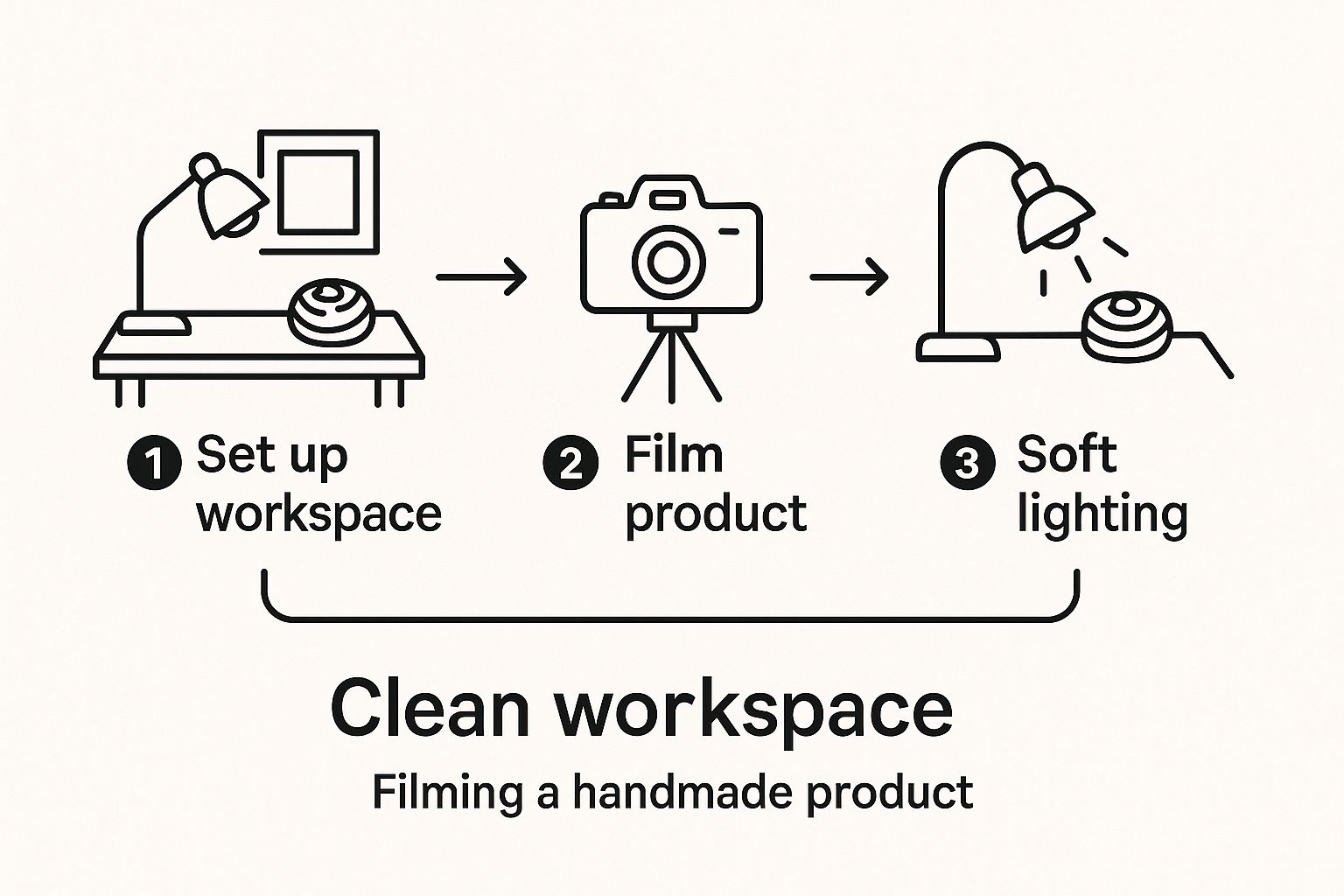
You don't need a fancy DSLR camera to get amazing results. Your smartphone is probably more than capable, especially when you pair it with good lighting. Natural light is your best friend here. Try shooting near a window on a slightly overcast day—it gives you soft, even light that gets rid of those harsh, distracting shadows.
To tell a complete visual story, make sure you include a mix of different shots:
- The Hero Shot: A crystal-clear photo of your product on a simple, uncluttered background. This is almost always your main thumbnail image.
- Lifestyle Shots: Show your product in action! A necklace being worn, a coffee mug being held, a print hanging on a gallery wall—these help customers see it in their own world.
- Detail Shots: Zoom in on what makes your product special. Highlight the unique textures, the quality of the craftsmanship, or other key features. This builds trust.
- Scale Shots: Take a photo that shows the size of your product next to something familiar, like a hand or a coin. This helps manage expectations and prevents surprises.
Use AI Tools for a Professional Edge
Getting that polished, studio-quality look used to mean expensive gear and a ton of technical skill. Not anymore. Today, AI-powered tools have completely leveled the playing field, giving every seller the power to create professional-looking images in seconds.
For example, a tool like ProdShot can take a single photo of your product and instantly generate dozens of high-quality, on-brand backgrounds for it.
This is a complete game-changer. It means you can create a huge variety of lifestyle and studio shots without the time or expense of a real photoshoot. It’s the key to making your shop look cohesive and truly professional. If you want to dive deeper, you can learn more about achieving professional Etsy product photography with these modern tools.
Price Your Products Strategically
Pricing can feel like a tightrope walk. Go too low, and you devalue your work and attract bargain hunters. Go too high, and you might scare off good customers. The secret is to price for value, not just for cost.
Of course, your price needs to cover your materials, your time, Etsy fees, and your profit. But it also has to reflect the quality, the craftsmanship, and the uniqueness of what you’re selling. Do some market research to see what your competitors are charging—not to copy them, but to understand the ballpark. If your product is better quality or has a unique feature they don't, don't be afraid to price it higher.
Boost Engagement with Listing Videos
Etsy lets you add a short 5-15 second video to your listings, and you should absolutely be using this feature. A video is the closest you can get to putting your product directly into a customer's hands.
Use that short clip to show off the details that still photos just can't capture:
- The way a piece of clothing drapes and moves.
- The sparkle of a gemstone as it catches the light.
- The satisfying click of a handmade wooden box closing.
- A full 360-degree view of a ceramic vase.
These quick videos give a massive boost to buyer confidence. They prove the quality of your work and clear up any lingering doubts, making that path from a click to a sale that much smoother.
Your Winning Product and Customization Strategy
The most successful Etsy shops I've seen aren't just random collections of things the owner likes to make. They're carefully curated boutiques, each with a clear point of view that speaks to a specific kind of person. Getting into that curator mindset, instead of just thinking like a maker, is the first real step to boosting your sales.
It all starts with an honest look at what’s actually working in your shop right now.

Pop open your Etsy Stats. Seriously, this data is your treasure map. Find your bestsellers—the items that consistently pull in sales, get favorited, and earn those glowing reviews. These are your star players, and they have a story to tell.
At the same time, you have to be brave enough to spot the duds. These are the listings that get clicks but no sales, or worse, get totally ignored. It’s tough to sunset a product you poured your heart into, I get it. But if buyers aren’t biting, it's just taking up valuable digital shelf space.
Dig Into Why Your Stars Shine
Once you've got your list of winners, it's time to play detective. Why are these specific products so popular? It's usually more than just the item itself.
- Read every single review. What exact words are customers using? Are they raving about the quality, the unique design, or how it was the perfect gift? These are golden nuggets of information about your product's real-world value.
- Check out your keywords. What titles and tags are on these top-performing listings? Whatever you're doing here is clearly working, so use this as a blueprint for your other products.
- Look at the customization. Do your bestsellers offer personalization? Often, the simple ability to add a name, a special date, or a custom message is what convinces a shopper to click "add to cart."
When you understand the DNA of your best products, you can stop guessing and start creating new items that already have a built-in audience. If your "Engraved Wooden Keepsake Box" is flying off the shelves, it’s a pretty safe bet that a "Personalized Wooden Picture Frame" with a similar vibe will do well, too.
Give Them the Power to Personalize
Etsy is the place for unique, handmade goods. That’s why we’re all here. And personalization is what truly sets an Etsy purchase apart from a generic, mass-produced item. Offering meaningful customization is one of the fastest ways to give buyers exactly what they're looking for.
This isn’t just a hunch; the numbers are loud and clear. A massive chunk of Etsy's business—roughly 30% of total Gross Merchandise Sales—comes from items that are custom or made-to-order. On top of that, gifting is a huge driver, making up an incredible 44% of all purchases on the site. You can read more about Etsy's sales trends if you want to dive deeper, but the path forward is obvious: personalized products aimed at gift-givers are a winning formula.
But please, don't just tack on a generic "add your name" option. Make it count.
My Key Takeaway: The best customization makes the buyer feel like they're part of the creative process. When they can add a personal touch—an inside joke on a coffee mug, a child's drawing etched onto a keychain, or wedding vows printed on canvas—the product's emotional value goes through the roof.
Here are a few ideas to get your wheels turning:
- Engraving/Embroidery: Let shoppers add names, initials, dates, or short messages to things like jewelry, leather wallets, or tea towels.
- Color & Material Choices: Offer a curated palette of colors or a few different material options (like cherry vs. walnut wood, or brass vs. silver finishes).
- Custom Illustrations: If you're an artist, offer to turn a customer's photo into a custom portrait or a whimsical illustration.
Zero in on Key Gifting Moments
With almost half of all Etsy sales being gifts, you absolutely have to think like a gift-giver. Go beyond just Christmas and Mother's Day. The real magic is in the smaller, more personal moments.
Think about all these powerful gifting opportunities:
- Weddings (bridesmaid proposals, groomsmen gifts, favors)
- Anniversaries (especially the big milestone years)
- New Babies & Baby Showers
- Housewarmings
- Pet Memorials
- Graduations
When you create listings specifically for these events (e.g., "Personalized Housewarming Gift for New Homeowners"), you tap directly into a flow of highly motivated buyers. They aren't just browsing; they're on a mission to find the perfect, unique present. This turns your shop from a general store into a go-to destination for thoughtful gifts, which will not only boost your sales but also build a loyal following.
Building Customer Loyalty for Repeat Business
Getting that first sale is a fantastic feeling, but the real secret to a thriving Etsy shop is turning one-time buyers into loyal, repeat customers. What happens after the sale is your golden opportunity to build a brand people remember, trust, and come back to again and again. This is where you move beyond a simple transaction and start building a real relationship.
The bedrock of that relationship is, without a doubt, exceptional customer service. It’s more than just replying to messages quickly. When a customer has a question or a problem pops up, your response can make or break their entire experience. If you handle every interaction with empathy and a genuine desire to solve their issue, you’ll earn more loyalty than a flawless order ever could.
Create an Unforgettable Unboxing Experience
The moment your package lands on their doorstep is a huge chance to wow them. Don't just ship a product; deliver an experience. A plain brown box is functional, but a beautifully packaged item creates a moment of genuine delight.
You don’t have to break the bank to do this. A few thoughtful touches go a long way:
- Branded Tissue Paper: This is a simple and surprisingly affordable way to add a splash of color and reinforce your brand identity.
- A Handwritten Note: Nothing beats the personal touch. A quick, "Thank you, Sarah! I really hope you love your new necklace!" shows a level of care that customers notice and appreciate.
- Care Instructions: A small, well-designed card with tips on how to care for their item adds immediate value and makes you look like a pro.
These details transform an online order into something that feels like a special, curated gift—even when they’ve bought it for themselves.
Get Smart with Etsy’s Marketing Tools
Etsy gives you some powerful tools designed specifically to bring customers back. Using them strategically is one of the smartest things you can do to boost your sales without spending extra on ads.
Just head over to the "Marketing" tab in your Shop Manager and click on "Sales and Discounts." This is your command center for creating targeted campaigns for people who have already shown they like what you do.
Pro Tip: Don't just run generic sales. Set up an automated "thank you" coupon that gets sent to recent buyers. It's the perfect little nudge to get them thinking about their next purchase. You can also create a special offer for shoppers who have favorited an item but haven't bought it yet.
Quality and Trust are Everything
At the end of the day, loyalty is built on a foundation of trust. That means consistently delivering high-quality, authentic products that live up to your photos and descriptions. Etsy itself is cracking down on fakes and raising its standards, which is great news for dedicated sellers who are doing things right.
With an average buyer-to-seller ratio of about 16:1, the demand is clearly there. But to stand out, you have to be committed to excellence. When buyers know they can rely on you for quality, they'll come back.
This commitment should shine through in every part of your shop, from your product descriptions to your customer service, and especially in your product photos. If you feel your images aren't doing your work justice, professional photo editing services for ecommerce can be a game-changer.
By focusing on these post-purchase touchpoints, you create a powerful feedback loop. Happy customers leave glowing reviews, which builds trust and attracts new buyers. To really cement these relationships, it's worth exploring effective loyalty strategies that can turn customers into a true community around your brand.
Answering Your Top Etsy Sales Questions
As you dive deeper into growing your Etsy shop, you'll find certain questions pop up over and over. These are the thoughts that can keep a seller up at night, wondering if they’re making the right moves. Let's tackle some of the most common ones with honest, practical answers to help you build a better strategy.

When you're new, that feeling of urgency is completely normal. You've poured your soul into creating your products, and you're anxious to see the sales start rolling in. So, let's get real about what you can expect on your journey to a more profitable shop.
How Long Does It Really Take To See More Sales?
This is the million-dime question every Etsy seller asks. The honest-to-goodness answer? It really depends on your approach.
If you’re just looking for a quick bump, you could run a tightly targeted Etsy Ads campaign on a product you already know sells well. That can bring in sales almost immediately. But that’s often more of a short-term fix than a long-term growth plan.
Sustainable growth is built on something much sturdier. It comes from mastering the fundamentals, like solid Etsy SEO, building a brand people recognize, and creating an unforgettable customer experience. These things don't produce results overnight; they compound. You might see a noticeable uptick in organic traffic in a few weeks, but it typically takes a solid 2-4 months of consistent work to see significant, lasting results.
A dose of reality: Think of it like planting a garden. Running ads is like scattering seeds—some might sprout fast, but they might not last. SEO and branding are like tilling the soil and nurturing deep roots for a harvest that comes back season after season.
Are Etsy Ads Worth the Investment?
Etsy Ads can absolutely be a powerful tool, but they aren't a magic wand for a struggling shop. They work best as an accelerator, not a starting point. From my experience, one of the fastest ways to burn through your budget is to throw ad money at a product that hasn't proven itself yet.
Before you even consider running an ad campaign, your listing needs to have a solid track record. Ask yourself:
- Are the photos fantastic? They need to be good enough to stop someone mid-scroll.
- Is the SEO on point? Your listing has to be optimized to attract the right kind of clicks.
- Does it already have a decent conversion rate? This proves that when people find it organically, they actually buy it.
If you can confidently say "yes" to all three, then ads can be a brilliant way to amplify what's already working. I always recommend starting small with a daily budget of $5-$10 and watching your return on ad spend (ROAS) like a hawk. If a campaign isn't turning a profit after a week or two, pause it and figure out what’s wrong with the listing itself.
How Many Listings Do You Need to Be Successful?
Ah, the classic quality vs. quantity debate. The truth is, there's no magic number of listings that guarantees success on Etsy. I've seen shops with just 20-30 incredibly well-optimized listings absolutely crush it, while other shops with hundreds of listings barely make a sale.
A small collection of stellar listings will always, always outperform a huge catalog of mediocre ones. Every single listing should be a masterpiece of amazing photography, smart SEO, and a description that connects with your ideal buyer. It's a far better strategy to focus your energy on perfecting a smaller number of products than to spread yourself too thin.
That being said, having a decent-sized inventory has its perks. More listings mean more chances to show up in search results and more "shelf space" for shoppers to browse. A good target for a newer shop is to aim for 30-50 listings, but only if you can maintain high quality across the board. Always choose to create one fantastic new listing over rushing to add a half-baked one.
Ready to create those high-quality visuals that make your listings impossible to ignore? With ProdShot, you can transform simple phone pictures into professional, on-brand product images in seconds. Stop guessing and start creating photos that actually sell. Try it for free today.